 Lite Mind
Why not run AI on the phone you already own?
16 September 2026 · about five minutes
The phone in your pocket is a serious computer. Most of the day it sits idle while you rent computing from someone else. The small jobs people hand to an AI fit on that phone. Run the model there and your words never leave your hand. Hardly anyone has been told this is an option.
Take your phone out and hold it for a second. It weighs about as much as a bar of soap. Inside is a processor with a handful of cores and gigabytes of memory beside it. The storage would hold a small library.
Plenty of laptops still in daily use would lose a straight fight with it. This is not the phone of five years ago.
Your phone is doing less than you think
And what does all that hardware do between breakfast and bed? It draws pictures of things happening somewhere else. A feed assembled on a server. A message stored in a data centre and shown to you a moment later. The phone is treated as a sheet of glass you look through, and the computer behind the glass belongs to somebody else.
So the power sits there. You bought a computer and you use it as a window.
We all rent our answers now
AI arrived in ordinary life the same way. You open an app, type a sentence, and a building full of machines somewhere does the thinking. Then a bill comes every month, or a small charge lands each time you ask. Either way you are renting.
That made sense when the only models worth using were enormous. For some work it still does, and I will get to that. But look at what people actually type.
Most of what we ask for is small
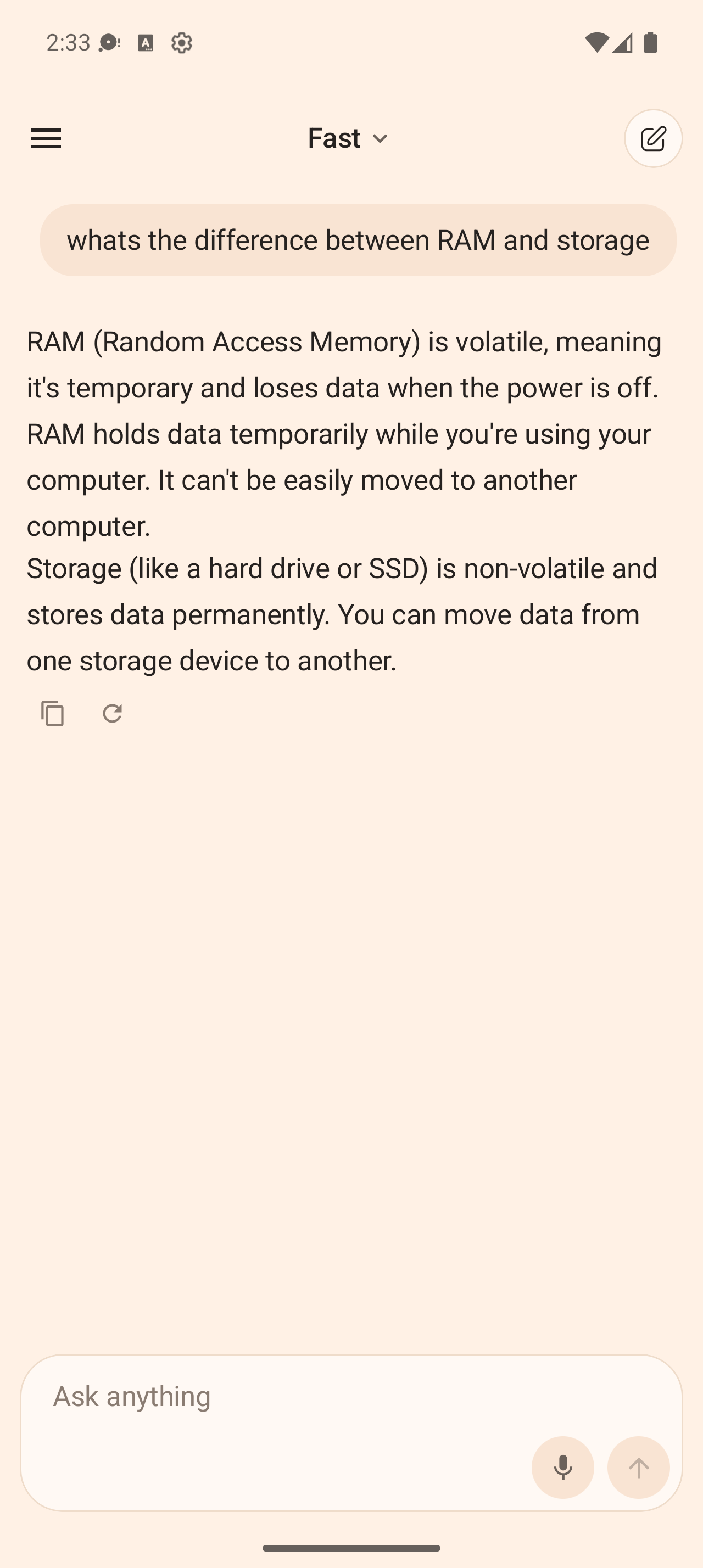
Rewrite this so it sounds less annoyed. Cut this to two lines. What does this word mean? Draft a reply that says no without being rude. Summarise this. Put this in French.
That is the bulk of everyday AI use, and none of it is hard. A model that fits in a 0.6 GB download handles it, on a phone with 2 GB of memory. The next size up is 0.7 GB and wants 3 GB. Both are a modest ask of a modern phone.
You own that hardware. You already paid for it. Sending a paragraph across the planet to be shortened, to a machine that costs a fortune to run, is an odd thing to do when the machine in your hand can shorten it.
When the cloud is still better
A model that fits on a phone is roughly a thousandth the size of a big cloud model. That gap is not a footnote. Ask a phone-sized model about a rare disease or an obscure novel and it will answer with complete confidence. It will also have made the whole thing up.
Hard questions, long documents, anything that happened this year, and reasoning that has to hold together over many steps: the cloud does all of that better, often by a wide margin. If you are reading a contract or choosing a mortgage, use the big model.
The claim here is narrower. Local handles a lot of the everyday work. It does not replace the cloud, and I do not use it as if it did.
Where do your words actually go?
Now the part that matters more than the hardware.
You type something into a cloud assistant. A half-written apology. A question about a symptom you have not told anyone about. The moment you press send, those words are sitting on a computer you will never see, run by people you will never meet.
From there you are trusting a promise. The policy says the data is deleted after some period. You cannot check. It says nobody reads it. You cannot check that either. You cannot walk into the server room or watch the delete happen, and if someone opened your chat last Tuesday, nothing in your possession would ever tell you.
This would be true if every company involved behaved perfectly. The problem is in the arrangement itself, and it stays there whoever is running the servers.
I am not accusing anyone. I have no evidence that any provider is careless or dishonest, and I am not suggesting it. The point is that the arrangement gives you, the user, no way to verify what happens to your words, and that stays true whoever is on the other end.
Once your words are on someone else's machine, all you can do is read what you are told.
When there is nowhere to send them
Run the model on the phone and the trust question goes away. Nobody had to answer it. There is no server behind the app, so there is no upload to encrypt and no deletion to hope for. Your words go from your thumbs into the model and back onto the screen, and the whole trip happens inside a thing you can hold.
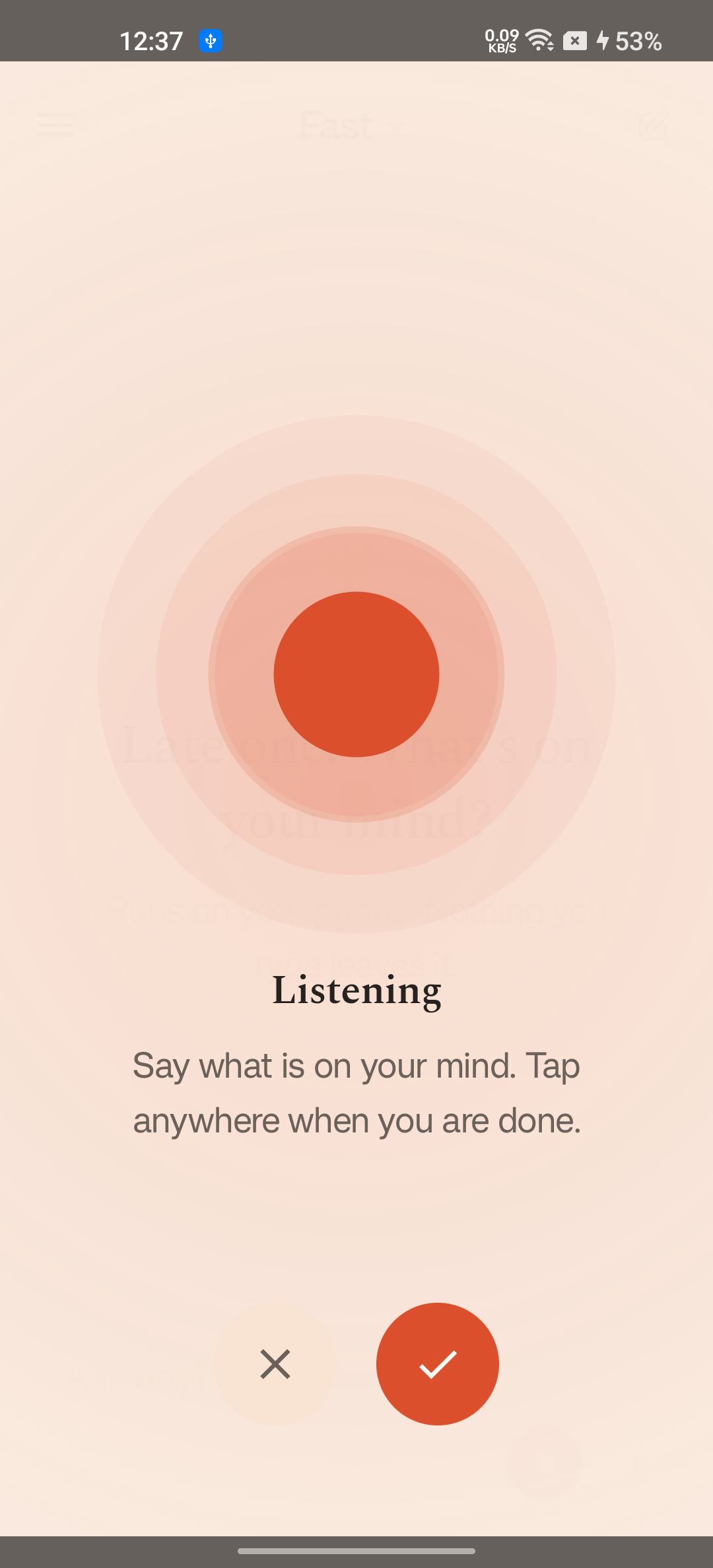
I built Lite Mind because I wanted this on my own phone. I have switched it to aeroplane mode and carried on chatting, and I use it. If you want the setup, there is a walkthrough of how to run an AI chatbot offline on Android.
The app is free and there is no account to make. There are no ads and no analytics either, for a plain reason: nobody is on the other end to collect anything, which is why the privacy policy is short.
And for once the hardware works for you. The cores you paid for run the model. The memory you paid for holds it. The phone does what a computer is for.
You already own the tool
None of this needs a special phone. Android 8.0 or newer on a 64-bit ARM chip covers most of the phones people carry. The model is downloaded once from Hugging Face. The engines underneath, llama.cpp and whisper.cpp, are open projects anyone can read.
There is an old rule about tools. If you own one that does the job, use it, and rent the bigger one when the job outgrows it. For a lot of what we ask an AI in a day, the sensible default is the tool already in your pocket, charged and switched on.
Most people have never been told.